이 콘텐츠는 어떠셨나요?
콘텐츠 언어
현재 모든 콘텐츠가 번역되지는 않습니다.
- 학습
- From complexity to clarity: How CloudZero powers smarter cloud and AI decisions with AWS
From complexity to clarity: How CloudZero powers smarter cloud and AI decisions with AWS
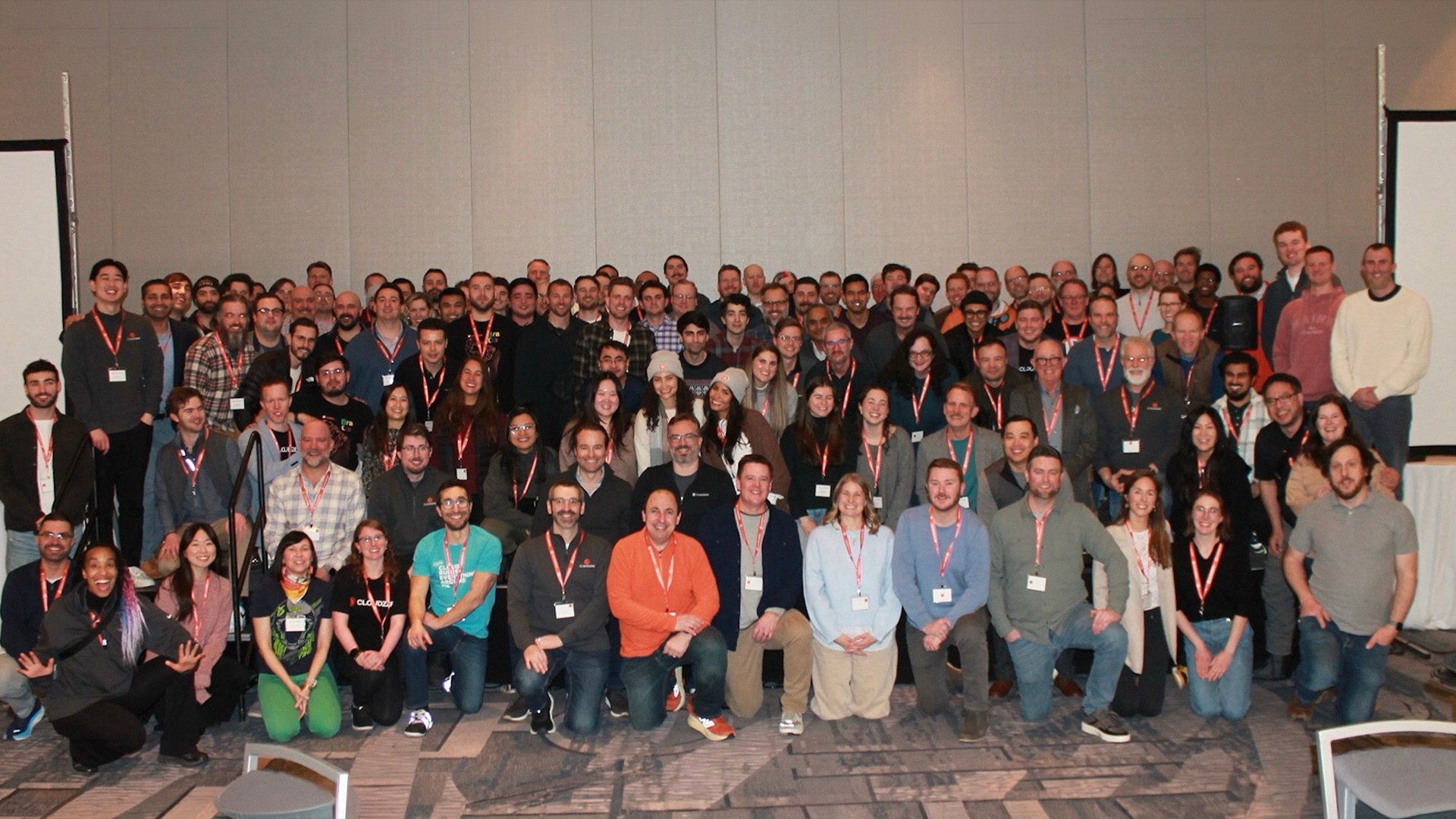
CloudZero started with a simple idea: that every engineering decision is also a financial decision. Built on AWS, the Boston startup helps its customers understand the true value of their cloud and AI investments, giving teams the real-time visibility and control they need to build efficiently in the age of AI.

Most software transformations begin with a technical specification. This one began with a budget. Before he became Founder and Chief Technology Officer at CloudZero, Erik Peterson discovered a principle that would shape the company’s future: every engineering decision is also a financial one. At the time, he was tasked with building a cloud-based scanning system at an application security firm, with one strict condition: his spending limit was just $3,000 USD.
Instead of treating the budget as a task to overcome, Peterson’s team treated it as a design requirement. Every architectural decision, from how workloads scaled to the AWS services used, was made with efficiency in mind. A few weeks later, they completed the project for $2,972 USD. “A kind of magical thing happened,” explains Peterson. “We completed this amazing project that required massive scale, but at an unbelievable level of efficiency.”
Beyond the project’s business impact, it also completely changed Peterson’s perspective. Instead of looking at cost as something to optimize after deployment, he realized it should shape engineering decisions from day one. This shift in thinking would ultimately become the foundation for CloudZero.
The gap between engineering and finance
Peterson soon realized that this challenge wasn’t unique to his project. As organizations were accelerating their migration to the cloud, engineering teams suddenly had the freedom to provision infrastructure rapidly. But they also now had to take responsibility for the financial consequences of their technical decisions.
Existing cost management tools weren’t designed for this new normal. Finance teams could see cloud bills at the end of each month, but engineers had little visibility into how the products and services they were building translated into business value.
“I love everything about cloud computing,” says Peterson. “But I was a little bit afraid that it might all disappear if we can’t make the economics of the cloud painfully obvious.”
The rapid adoption of generative AI makes this opportunity even more important. AI has introduced new categories of technology investment, adding new considerations for organizations as they evaluate the return and business impact of their initiatives. As companies continue to experiment with foundation models, agentic AI, and complex cloud architectures, they need a way to better connect engineering decisions with business outcomes.
Launching a financial control plane
In 2016, Peterson founded CloudZero, a platform that bridges the gap between engineering decisions and financial outcomes. CloudZero combines cloud usage and spend data to help organizations understand the true economics of their products, services, and AI workloads. Rather than focusing on reducing costs, it helps teams fully understand the value generated by every technology investment.
Peterson explains, “What CloudZero has been able to do uniquely is combine both the information that describes how much you’re spending with the information that describes how you’re using the cloud, so you get the complete unit economics picture. With that information on hand, you can find out what your true margins are, who your most profitable customers are, and what the most value-driving components in your system are.”
Scaling with serverless architecture
When building its architecture, CloudZero's team applied the same principles that first inspired it on day zero: rather than managing infrastructure, they wanted to focus on building product. Despite serverless computing still being in its early days, CloudZero made the decision to build almost entirely on AWS serverless systems.
Having worked with AWS at his previous company, Peterson began building this relationship almost immediately after founding CloudZero. “Around 30 to 60 days after we started the company, I started exploring the AWS partnership,” he says. “We knew that AWS was the environment that would give us the most customer trust and help us accelerate what we were building.”
Today, more than 90 percent of CloudZero's compute runs on AWS, including AWS Lambda for serverless compute, Amazon Elastic Container Service (ECS) with AWS Fargate for containers, and AWS Step Functions for orchestrating application workflows. Together, this has helped the startup minimize operational overhead so engineers can focus on developing new capabilities rather than maintaining infrastructure. "I love it when I can make a technology problem somebody else's problem," Peterson says. "We don't want to manage the servers; we want to build the product."
As AWS has evolved, CloudZero has continued to adopt new capabilities. The startup now uses Amazon ECS, Native Iceberg tables in S3 with Amazon Athena and AWS Glue, and Amazon Aurora to support the increasing scale and complexity of its platform. Peterson credits this serverless-first approach with helping CloudZero maintain a lean engineering team as they continue innovating.
Powering the AI era
"AI has made it even harder to understand the ROI of what you're building," says Peterson. "It's catapulted our platform from being a nice-to-have to something that's absolutely essential for understanding the return on all of these AI initiatives."
Recognizing that cloud infrastructure and AI workloads were becoming increasingly interconnected, CloudZero expanded its platform to provide end-to-end visibility across the entire AI lifecycle. In 2026, the company launched its Financial Control Plane for AI, helping organizations understand the cost of designing, building, and deploying AI-powered applications.
To support this change, CloudZero embraced Amazon Bedrock for foundation model flexibility, alongside Amazon Bedrock AgentCore for agentic workflows. By building with the same AI services its customers were adopting, CloudZero gained first-hand experience of how organizations were developing AI applications, while expanding its ability to capture and analyze AI-related spend.
"We now think of our platform as a financial control plane for technology decisions," says Peterson. "We have an opportunity to guide customers from those earliest design decisions all the way through to deploying and serving AI applications, helping them understand the return on every investment."
Customer behavior has already reinforced this shift. Over the past year, CloudZero has seen AI telemetry flowing through its platform increase by more than 1,171 percent with 14 trillion events processed by CloudZero’s allocation engine over the past twelve months, highlighting the rapid adoption of AI workloads and the growing demand for real-time financial visibility.
A decade of joint innovation
Today, organizations use CloudZero’s platform to manage over $14 Billion USD in cloud and AI spend. Despite its scale, the startup has experienced remarkably few disruptions over the past decade. "I can count on one hand in the last 10 years the number of times we've had an outage that was our fault," says Peterson. "I don't have to think about patching servers. I just get to focus on building great capabilities and features for our customers."
Rather than spending time maintaining infrastructure, the CloudZero team has been able to continually evolve its platform, embracing new AWS capabilities as they emerge while helping customers better understand the value behind every technology decision.
This growth has been underpinned by a strong, decade-long partnership with AWS. CloudZero joined the AWS Partner Network within weeks of its founding, and today, between two-thirds and three-quarters of its customers purchase through AWS Marketplace, streamlining procurement and platform adoption.
For Peterson, however, the partnership extends beyond technology and go-to-market support. "People often assume we've had this experience because we've been working with AWS for a long time. But from the executives down to everyone I've worked with, there's a genuine customer obsession. It's not just a slogan; it really is part of how they operate."
Further validation of AWS and CloudZero’s shared perspective came at AWS re:Invent 2023, when Amazon CTO Werner Vogels described cost as a non-functional requirement in software design, a principle CloudZero has championed since its founding.
The future of software decisions
For Peterson, the rise of AI is fundamentally changing what startups are capable of building. "Everyone is getting a promotion," he says. "They can do more than they could have ever dreamed before."
CloudZero sees its role as helping organizations bring financial clarity to the AI era, offering the real-time visibility they need to understand the cost of designing, building and running increasingly autonomous AI applications.
As the industry evolves, CloudZero plans to continue working with AWS to help customers innovate with confidence and understand the value behind every investment. "We've had this great origin story, we've had this great partnership, but even more so, we've been aligned," Peterson says. "We share the same goal as AWS: helping our customers succeed."
이 콘텐츠는 어떠셨나요?